Basic Criteria in Aluminum Injection Mold Design
16 July 2026

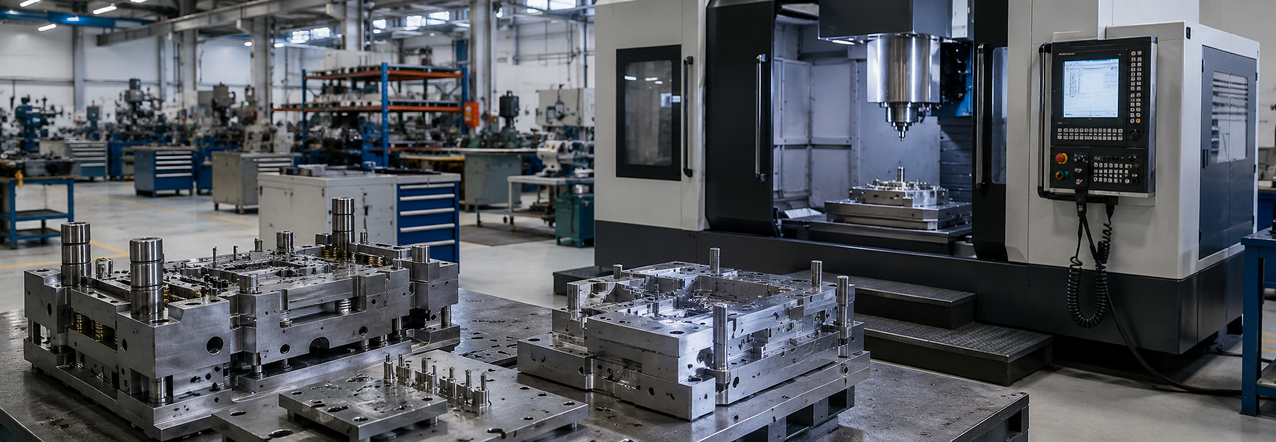
The mold production process progresses by converting three-dimensional design data into machinable tool paths. The mold model prepared in the CAD environment is transformed into movements that the CNC machine can execute via CAM software. Tool selection, cutting direction, feed rate, and machining sequence are determined at this stage. The combined use of CAD and CAM systems helps to transfer design changes more controllably to production and reduces programming errors.
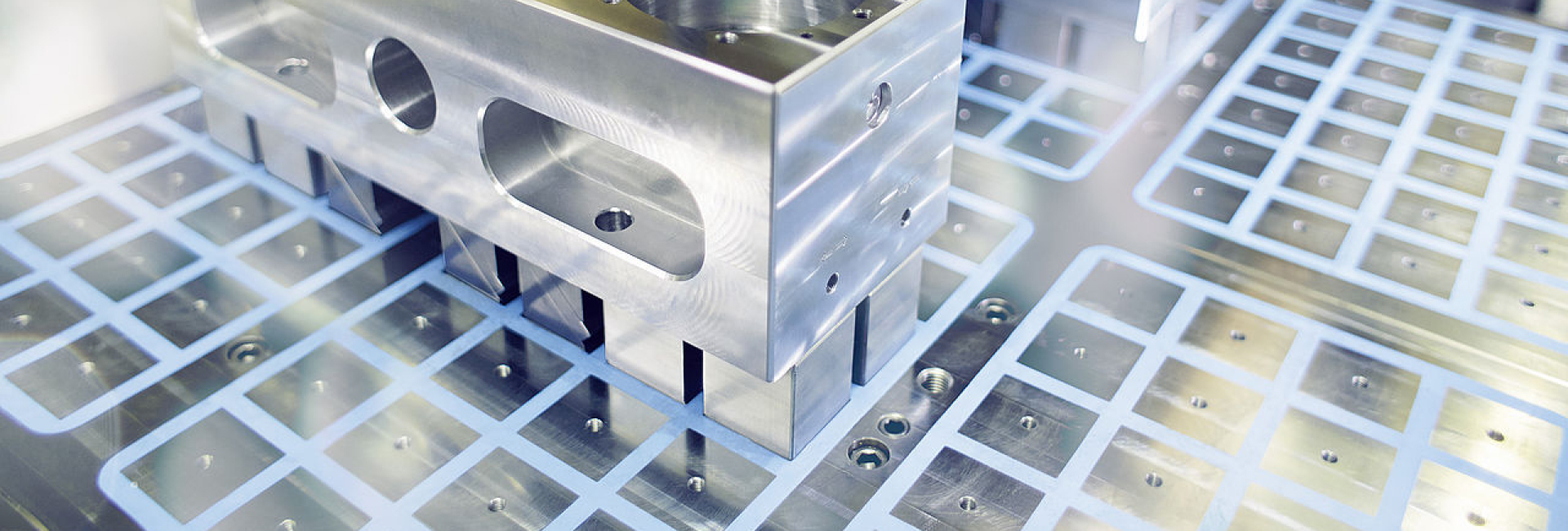
CNC machining typically consists of roughing, semi-finishing, and finishing stages. During roughing, excess material in the mold block is removed in a controlled manner. In the semi-finishing stage, surfaces are brought close to final dimensions. In finishing operations, mold cavities, mating surfaces, and detailed geometries are refined to achieve the desired surface quality.
High-speed machining strategies support the preparation of complex mold surfaces with smoother tool movements. Correct tool path selection reduces machining time and cutting tool load while contributing to more balanced surface quality.
In aluminum injection, zinc, and trimming molds, deep pockets, inclined surfaces, fine channels, and geometries at different levels may be present. Three-axis machines are sufficient for many basic operations, while multi-axis machining methods can be utilized for more complex regions. Controlled adjustment of the tool angle allows difficult-to-reach surfaces to be machined under more suitable cutting conditions.
Erosion processes can be used in narrow and deep areas inaccessible to cutting tools. In this process, the necessary electrodes are precisely prepared on CNC machines. The compatibility of the electrode geometry with design data directly affects the accuracy of the mold surface obtained after erosion. CAM systems support the creation of suitable tool paths for electrode machining and wire erosion operations.
One of the significant advantages of CNC machining is the ability to repeatedly apply the same program with set parameters. However, accurate results depend not only on machine precision. Clamping, tool wear, temperature variations, and zero point settings can also influence measurements. Therefore, regular measurements should be performed between machining stages, and critical surfaces should be inspected.
Planned CNC machining supports the preparation of mold components in a compatible manner, facilitates assembly, and reduces subsequent corrections. The combined use of CAD, CAM, tool path verification, and process simulation contributes to a more traceable manufacturing process.