Basic Criteria in Aluminum Injection Mold Design
16 July 2026

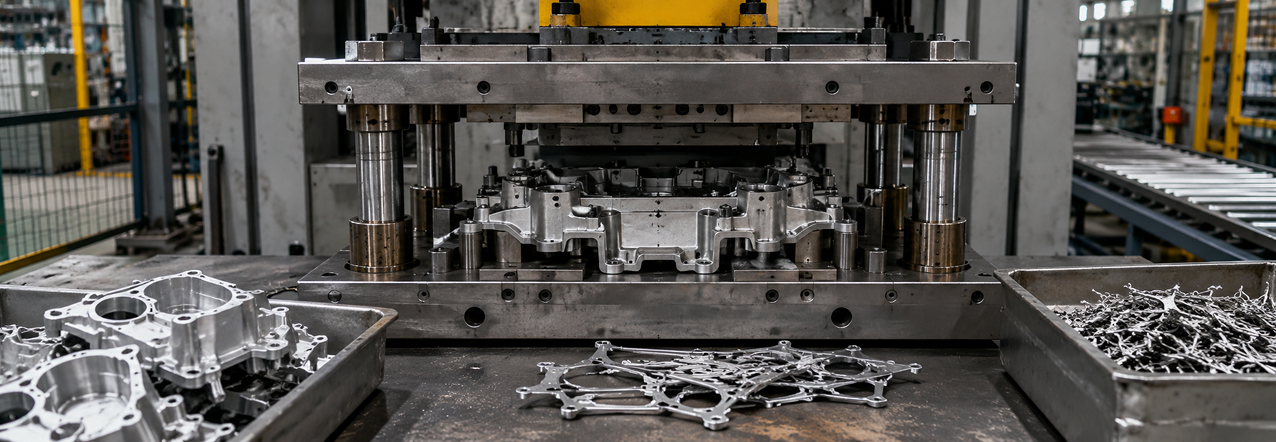
During pressure casting, molten metal reaches the mold cavity through the sprue system. When the production is complete, the part is removed from the mold along with sprues, overflow regions, and fine burrs. The trimming mold separates these excesses from the cast part, preparing it for subsequent manufacturing stages. The process is usually carried out by placing the part on a specially prepared mold and cutting it with pressing force.
The main purpose of trimming is to remove regions from the casting that are necessary during the process but should not be present in the final product. Sprues facilitate the transfer of metal into the mold cavity, while overflow pockets support filling balance and air venting. After casting, these regions must be cut in a controlled manner. A proper trimming process preserves the main geometry of the part while removing excess material.
Proper positioning of the part during trimming is very important. Support surfaces on the mold are prepared to prevent the part from bending or shifting under processing forces. The cutting line is determined based on the geometry of the cast part and the connection points of the sprues. This ensures that each cycle repeats in the same regions and supports dimensional consistency.
The cutting elements in the trimming mold are positioned according to the shape of the regions to be removed. Selecting appropriate cutting gaps helps achieve a clean surface and prevents damage to the part. If there are sprues or overflow regions in different directions on the part, the mold structure can be designed to support multiple cutting movements.
Manual cleaning processes can lead to variations in part quality and longer processing times. Trimming molds operated with presses support more organized and repeatable operations. This method is one of the commonly used final process steps in pressure casting production.
After trimming, cutting surfaces, part geometry, and the amount of remaining burrs should be checked. Wear on the cutting elements can affect cutting quality over time. Regular cleaning, lubrication, and part inspections help ensure the mold operates stably throughout mass production. A well-designed trimming mold enables the cast part to be transferred more controlled to subsequent machining and assembly stages.